Forest School · 8 August 2026
What is Forest School?
What is Forest School?
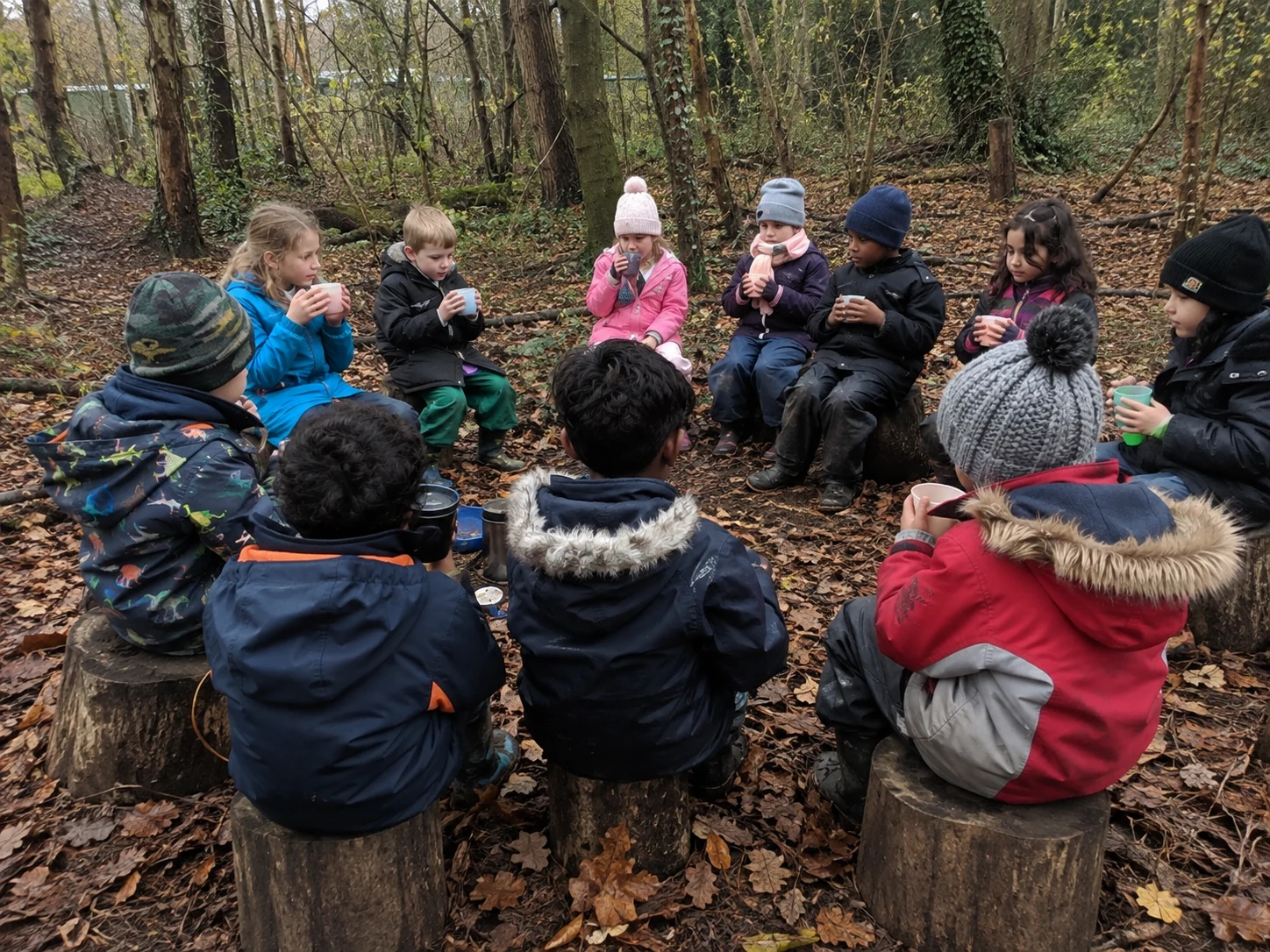
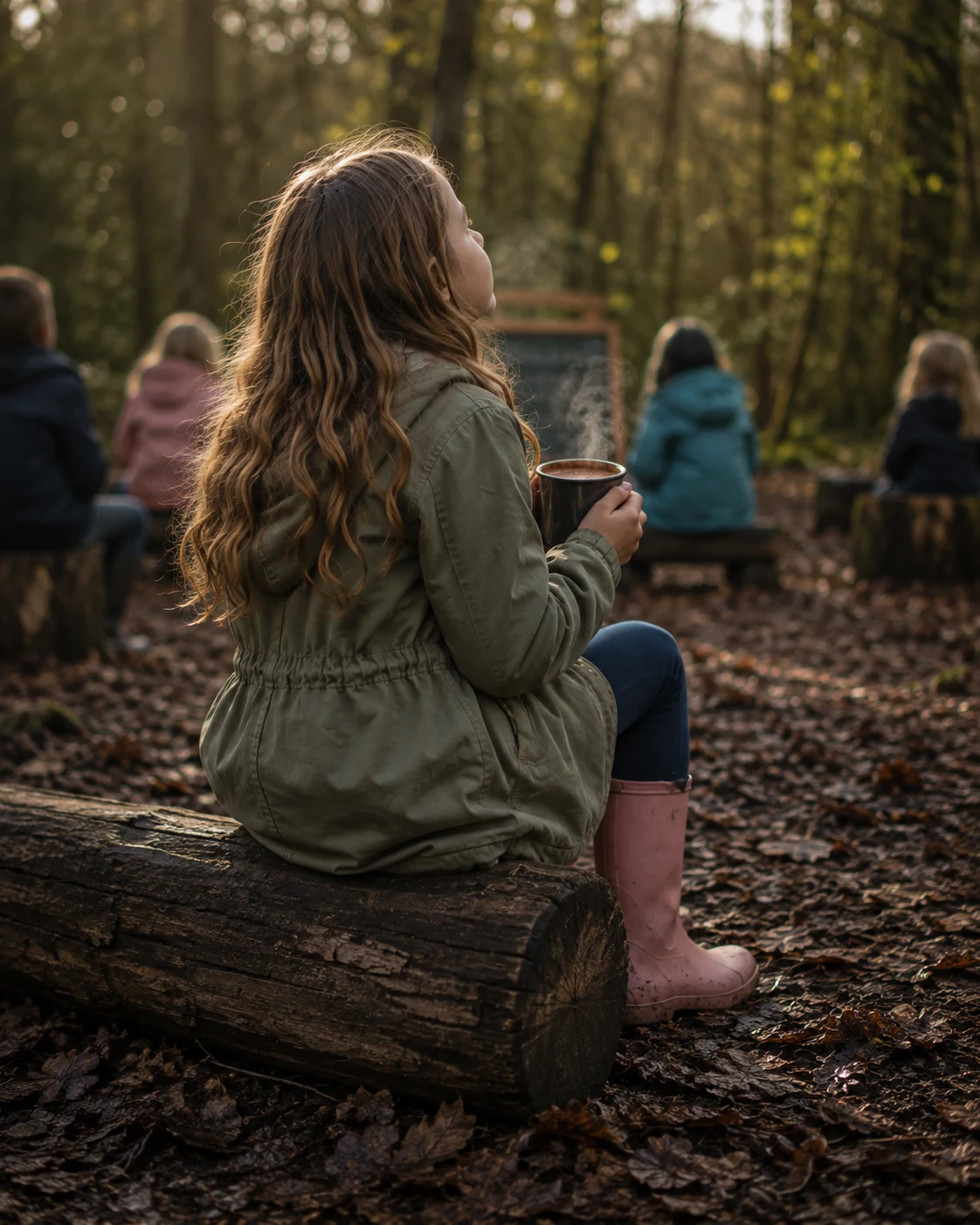
If you were to ask a young child this question, they might tell you, “It’s where we all sit on logs and have hot chocolate and marshmallows!”
There is a beauty in this little answer and, in many ways, I feel it answers our question. However, we will come back to that later.
If you were to ask the Forest School Association (FSA), they would tell you:
“Forest School is a child-centred inspirational learning process that offers opportunities for holistic growth through regular sessions. It is a long-term programme that supports play, exploration and supported risk-taking. It develops confidence and self-esteem through learner-inspired, hands-on experiences in a natural setting.” 1
In 2011, following an extensive consultation with Forest School practitioners, six principles were agreed to help define Forest School practice in the UK.
I won’t list them all here, but when I read through them alongside some of the wider literature, the same ideas kept coming up:
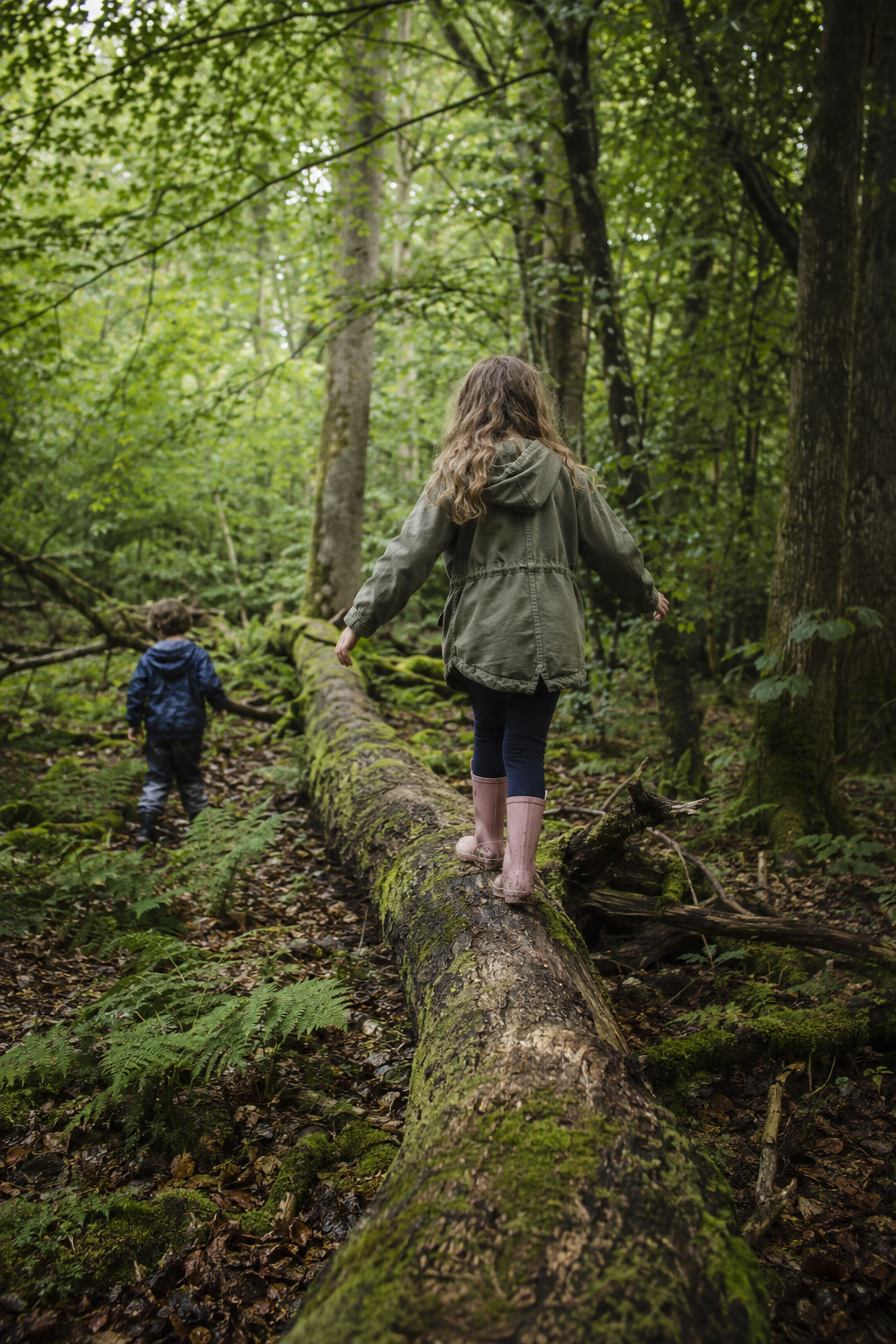
- Sessions need to take place in a natural environment, ideally with trees.
- Sessions need to be run over a sustained period: several weeks, and preferably several months, covering at least one seasonal change.
- The learning is play-based and experiential.
- The learning and activities are child-led and child-initiated.
- The group should remain consistent and return to the same wooded area each time.
- Learning takes place through developing relationships with peers and the natural world, including plant life and all creatures.
- Learning takes place through observing each other and the natural world, particularly as the seasons move on and children recognise and experience the changes taking place.
- Children should be free to explore and take measured risks.
- Risk-taking should be supported by a competent and responsible adult.
- Sessions should be facilitated by a qualified and reflective practitioner who encourages the children to exercise agency, judgement and responsibility.
Interestingly, the use of tools, knots, fire and woodland crafts is not essential, although these are common features.
They have their value, of course, but their role really depends on the group and where the learning has naturally taken them.
These ideas describe Forest School quite well in the technical sense and, if this philosophy is applied, for all intents and purposes, you have yourself a Forest School.
But…
I still feel this is not quite enough.
Cree and Robb point out that Forest School is quite a hard thing to define and, in their book, they use many case studies as a means of showing you what Forest School is rather than telling you.2
I believe this may be the only way Forest School can be explained.
With that in mind, I have a case study of my own I would like to share. One I think captures the spirit of Forest School.
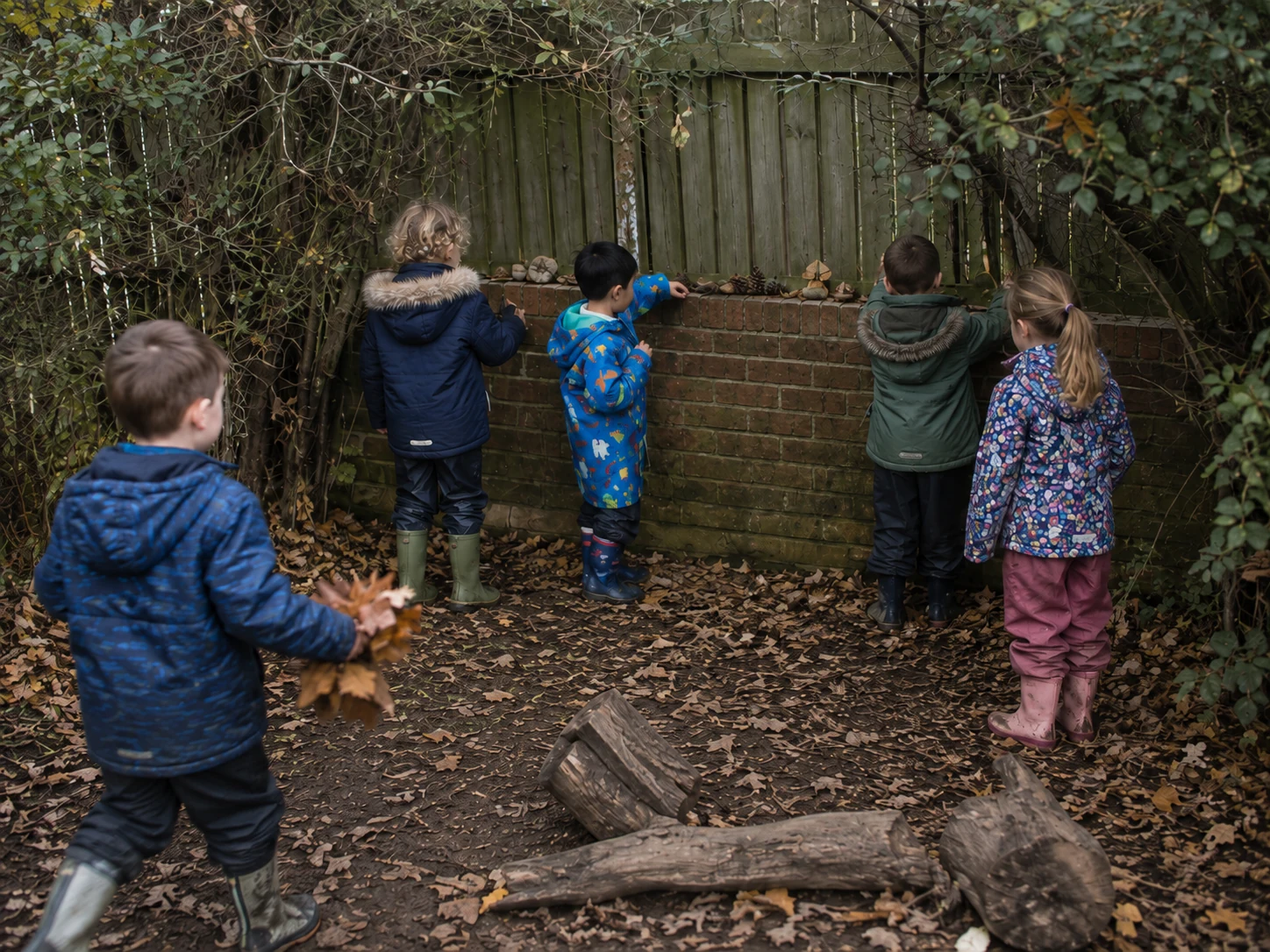
During the sessions I run, the children always discover a small alcove in the hedgerow. Behind the hedge is a stone wall that comes up to the children’s chest height.
Every year, and all throughout the year, without fail, this is turned into a shopfront. The children do this independently, with no suggestion from the adults.
They hunt, forage and craft various items that are carefully placed on the ledge before they loudly and excitedly proclaim, “THE SHOP IS OPEN!”
They often demand leaves or twigs for payment and assign value to each.
This is normal children’s play, of course.
What is unique here is that, as we move through the seasons, the things children present to buy change. We often have many pine cones and acorns in the shop over the autumn months, with children demanding different coloured leaves as payment.
One child distinctly used to ask for “Crunchy leaves only!”
He was adamant about this and would thoroughly inspect the leaf with both hands before grading its crunchiness and firmly asserting whether it was legal tender.
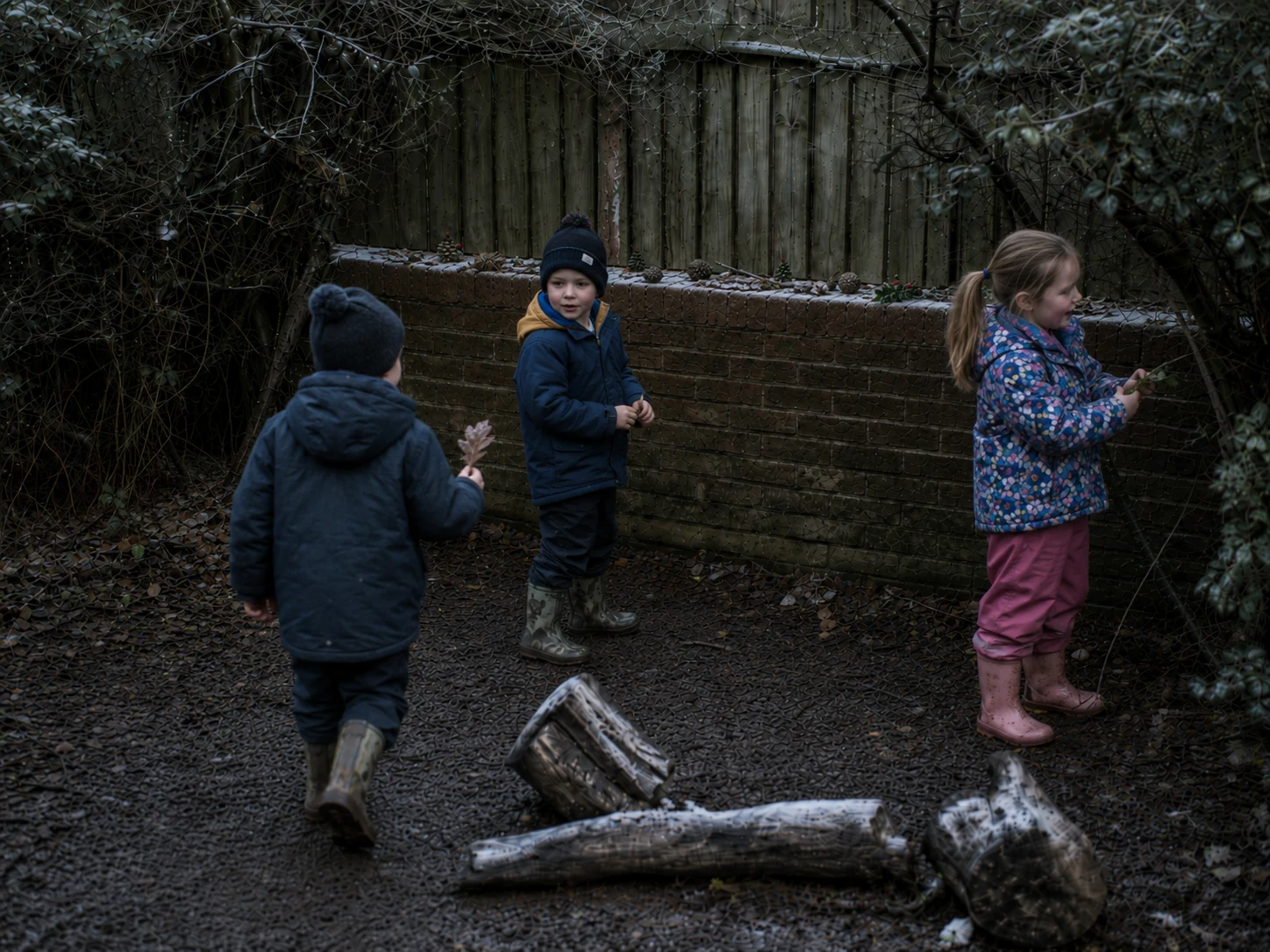
The cones that survive until winter often get painted green, becoming mini Christmas trees and, when it is really cold, we often see frosted leaves or even chunks of ice find their way into the shop.
The ice chunks survive a short while in the game before someone decides more joy can be found in smashing them against the logs. When this happens, there is a wonderful opportunity to ask the children how they can keep themselves safe while playing and what could happen when they throw ice blocks.
When trusted with this responsibility, they rise to the challenge. They assess the risk themselves and tell you what they can do to reduce it.
Some children go digging and return with several pots full of worms to sell. This happens more often in late autumn and winter for our group. It leads to another impromptu discussion about how creepy-crawlies can be kept safe and how they might get back home when the children have finished with them.
One time, a child exclaimed that most of the green leaves had gone, so she would only be accepting them “because it’s cold and leaves don’t grow, so they are rare, aren’t they?!”
This again naturally leads us into a group discussion about how to be responsible when picking leaves and flowers, and what happens to our plant life and wildlife if we take too much without giving back.
What is also wonderful to see here is how this child is beginning to develop an understanding of rarity and value in a very real and tangible way.
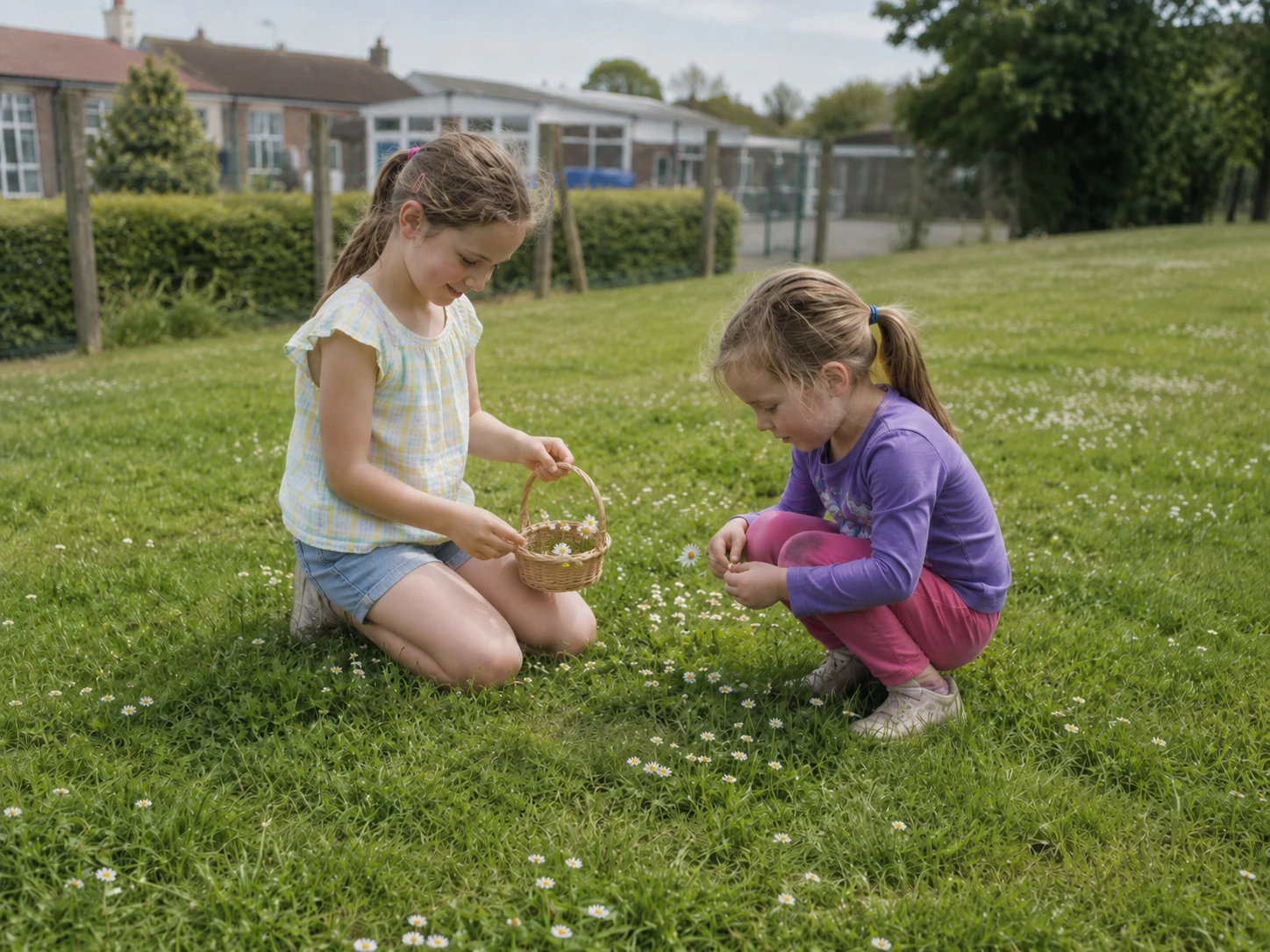
As spring and summer roll around, dandelions and daisy-chain bracelets become a common feature. The children’s rock paintings begin to reflect brighter colours, rainbows, butterflies, bunny rabbits, baby chicks and eggs. These also find their way into the shop.
By this point, the children have become far more creative and confident with their ideas because they have spent nearly a year with their cohort and have built many memories together, learning how to communicate, compromise and solve problems.
One day, the children became frustrated because others kept arriving before the shop was ready. After discussing the problem, they decided to make a large sign with open on one side and closed on the other.
This created another problem: they had no way to display it. A child who had carefully designed a menu for his fruit basket, which contained stones painted to resemble fruit, faced the same difficulty.
Together, they remembered a wooden pallet on the other side of the site and persuaded two other children to drag it over while they stayed behind to guard the shop.
Once the signs were hung, they organised a grand opening, found a ribbon and invited me over as the ‘VIP’ to cut it and officially declare the shop open.
You can see here that one simple form of play can evolve over time, presenting new challenges and requiring different skills as the children engage with it.
They assess risks, negotiate the value of a leaf, find ways to display signs without others disturbing their set-up and persuade their friends to help move a heavy object.
These moments also create natural opportunities for discussions about safety, responsibility and care for the environment. The discussions are meaningful because they arise within the children’s play rather than being introduced as separate lessons.
The children choose to return to the shop on their own terms, with the adult usually becoming involved only when invited.
This is an important feature of the Forest School ethos and helps explain why a consistent group, a familiar outdoor space and sessions continuing across the seasons appear so often in the literature.
The children’s play is deeply and often unconsciously shaped by the weather and the changing landscape. The materials in their shop, the value they place upon them and even the things they choose to make alter throughout the year.
Earlier, I suggested that Forest School may be easier to show than to explain. Hopefully, this small case study has done that, given a reasonable picture of what Forest School looks like in practice and answered the question: What is Forest School?
We can define Forest School through principles, policies and pedagogy. We can talk about qualified and reflective practitioners, long-term programmes, supported risk-taking and child-led learning.
Yet I believe the question is really answered by the child whose little face lights up when you ask them about Forest School and they tell you:
“It’s where we sit on logs and have hot chocolate and marshmallows!”
Their mind is cast back to the truly visceral memory of the warmth of the chocolate, the cold wind in their hair, the smell of damp leaves on the ground, the trees swaying above them and the sound of birds singing nearby.
It is a powerful memory and the child is sharing it with you in the only way they can.
My reading material
- Forest School Association (n.d.) Full Principles and Criteria for Good Practice.
- Cree, J. and Robb, M. (2021) The Essential Guide to Forest School and Nature Pedagogy. Abingdon: Routledge.
- Knight, S. (2013) Forest School and Outdoor Learning in the Early Years. 2nd edn. London: SAGE.
- Beresford, K. (2021) Exploring the Effectiveness of ‘Forest School’ on the Health and Development of Pre-school Aged Children. NIHR School for Public Health Research.
- Dabaja, Z.F. (2022) ‘The Forest School impact on children: reviewing two decades of research’, Education 3–13, 50(5), pp. 640–653.
- Garden, A. and Downes, G. (2021) ‘A systematic review of Forest Schools literature in England’, Education 3–13.
- Knight, S., Coates, J.K., Lathlean, J. and Perez-del-Aguila, R. (2024) ‘The development of an interdisciplinary theoretical framework for Forest School in the United Kingdom’, British Educational Research Journal, 50, pp. 905–922.
- Waite, S. and Goodenough, A. (2018) ‘What is different about Forest School? Creating a space for an alternative pedagogy in England’, Journal of Outdoor and Environmental Education, 21(1), pp. 25–44.