War, weapon and super hero play
Should we ban war, weapon and super hero play?
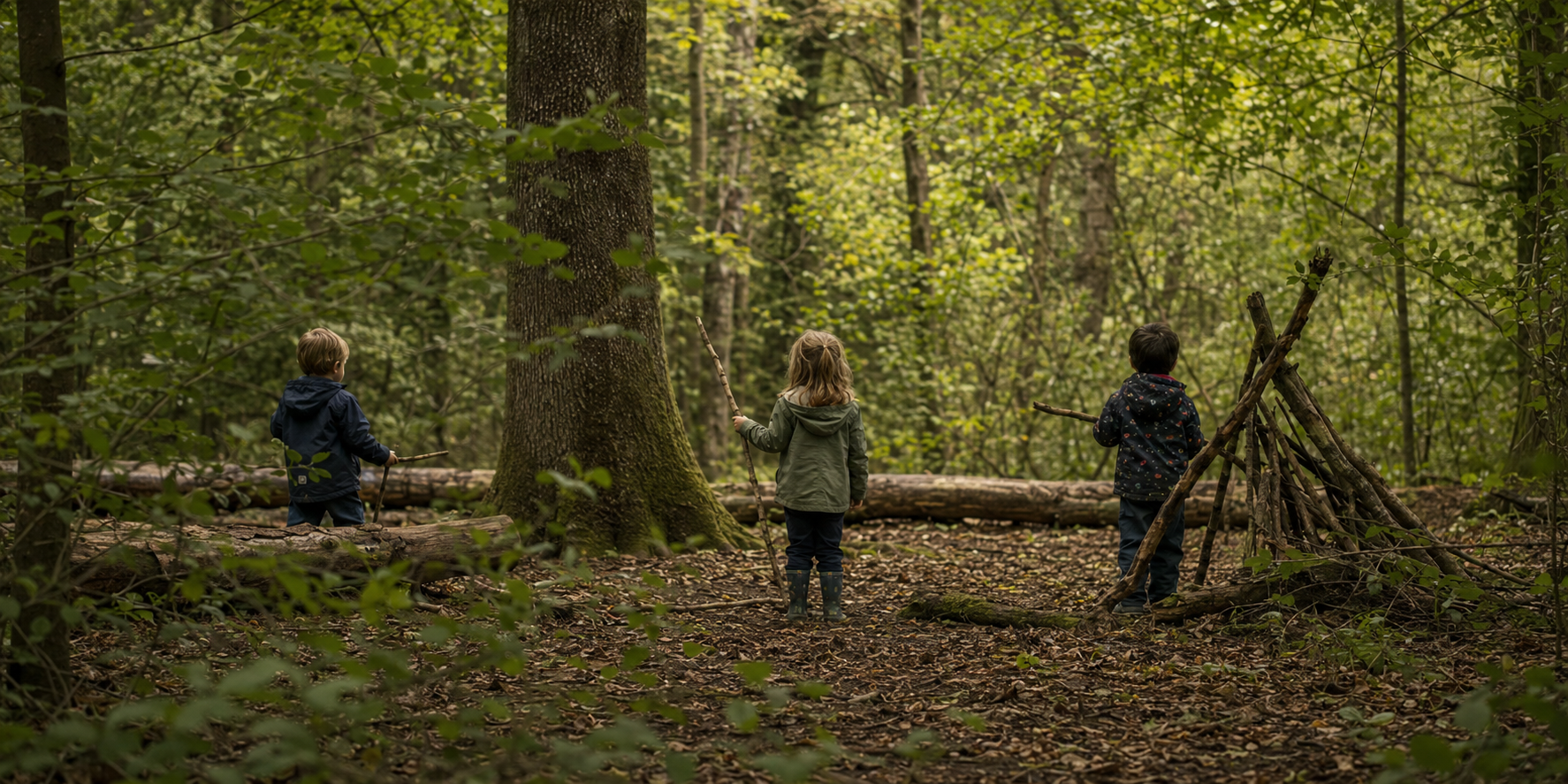
One morning, during a Forest School session, he finally plucks up the courage to leave the teacher’s side and take a very cautious wander. He notices a stick. Not just any stick. Something about this one just feels right. He glances around, a little unsure of himself, before picking it up.
For the uninitiated, there is something genuinely magical about finding the perfect stick, especially when you are four years old.
A smile slowly appears on his face. He begins to move through the forest, weaving in and out of bushes, stepping over logs and ducking beneath branches. He grips the stick like a rifle, crouches behind a log and takes aim at two other boys nearby. They freeze.
Taking a leap of faith, he fires, making quiet gun noises as he does. The other boys react instantly. They dive for cover, grab sticks of their own and return fire. Soon they are running, hiding behind trees and logs, chasing each other, laughing and smiling.
Their play begins to develop further as they give themselves names and take on roles. A narrative begins to form. Eventually, they decide a fort needs to be built so they can “defend from the enemies”.
“Errrr! No thank you!”
The adult’s voice cuts sharply through the air as she marches towards the boys, finger wagging. “We don’t have guns in nursery, do we?” she says, before instructing them to come and do some colouring instead.
The smiles disappear as quickly as the sticks hit the ground. The boys drift away, resigned to what feels very much like a punishment.
The shy boy, who for a brief moment had almost made two friends, returns to the teacher’s side.
No stick.
No smile.
No confidence.
I witnessed this scenario a few years ago and was not in a position at the time to get involved. I will never forget that boy’s face when he had to drop his stick. Having spoken to a colleague recently, I discovered they had an almost identical experience.
I now find myself reflecting on this play because, when I was a child, I turned many sticks into guns, swords and light-sabres and battled many imaginary enemies.
Am I a bad person for having played like this as a boy?
Are my parents bad for having let me?
Am I a bad teacher for giving children space to play like this?
I ask these questions because, in my twenty years of early years teaching, I have noticed that there is a disconnect. There are those who talk about how valuable this play can be, while in my experience the majority will avoid the play or outright ban it.
As a male teacher who has spent the majority of their career in Forest Schools, and who even had a secret stash of sticks in the garden as a boy, I clearly have a bias towards this play. With that in mind, I hope to evaluate it as objectively as possible.
My first thought is why many adults have such little tolerance for this type of play and where this low threshold comes from.
It is not entirely unreasonable to hold this position, but there must be a history behind the reasoning.
As Donaldson puts it:
“I believe we must be prepared to examine our own stories and to interrogate those most deeply held moral convictions which can make us deaf to the needs and understandings of children.”1
There is a strong possibility that following the world wars, grandparents and older practitioners, many of whom had lived through war or its aftermath, might have wanted nothing more to do with any kind of violence and certainly would not have wanted to risk encouraging war-like tendencies in their children.2
The idea that war, weapon and superhero play made this generation nervous therefore makes sense, as does the idea that they would discourage the play the moment it emerged.
If this was the case, then the development of an unspoken rule is very likely to have manifested.
Long-serving early years professionals reported that no written policy ever existed, but recalled an unspoken expectation to discourage war and weapon play.2
That influence, passed on informally through advice, modelling and day-to-day interactions, may have subconsciously set a standard.2
Newer practitioners, learning their craft from more experienced staff, were likely to follow suit, not necessarily because they had explicit rules or training, but because it was what they had always known.2
What we seem to have, then, is an “unwritten rule”, reinforced more by habit and inherited values than by direct evidence or policy.2
Other influences may include anti-sexist and feminist movements from the 1970s and 1980s contributing to views on gender and violence in early childhood.2
Training sessions at the time often grouped gun play, Barbie dolls and superhero themes together as examples of problematic or gendered play.2
While the intentions may have been to champion equality, these movements may also have contributed to the discouragement of traditionally “male” forms of play, particularly those viewed as aggressive.2
That is a much bigger conversation for another time, perhaps.
But it is certainly worth consideration.
These influences likely shape attitudes towards this type of play more than we realise and require deep self-reflection when brought into question.
More anecdotally, the discussions I have had in practice often raise surface-level concerns such as:
This type of play just teaches violence, doesn’t it?
The behaviour is loud, boisterous and difficult to manage.
They always end up arguing and fighting for real.
Again, these are not unreasonable concerns to have, and it is understandable that adults might wish to avoid the play without question. However, if we are to take Donaldson’s advice seriously, we must interrogate these deeply held beliefs.
One important aspect to consider is that children will seek this play out whether adults choose to allow it or not.2 If we stop the play, children may simply explore it out of sight,2 potentially learning that there are parts of themselves they need to hide from the adults around them.
I find that a troubling thought.
White explains how children’s bodies are naturally driven to seek the experiences they need,3 and boys in particular appear to return to this type of play frequently.34
If this is the case, then the argument can be made that children need this play and if they are going to seek it out either way, perhaps we should explore the possible benefits.
When reviewing play as a Forest School practitioner, we always weigh risk against benefit, recognising that eliminating risk is not the goal and that carefully managed risk can offer valuable learning opportunities.5
With this in mind, I would like to share an example of play recently observed in my own Forest School.
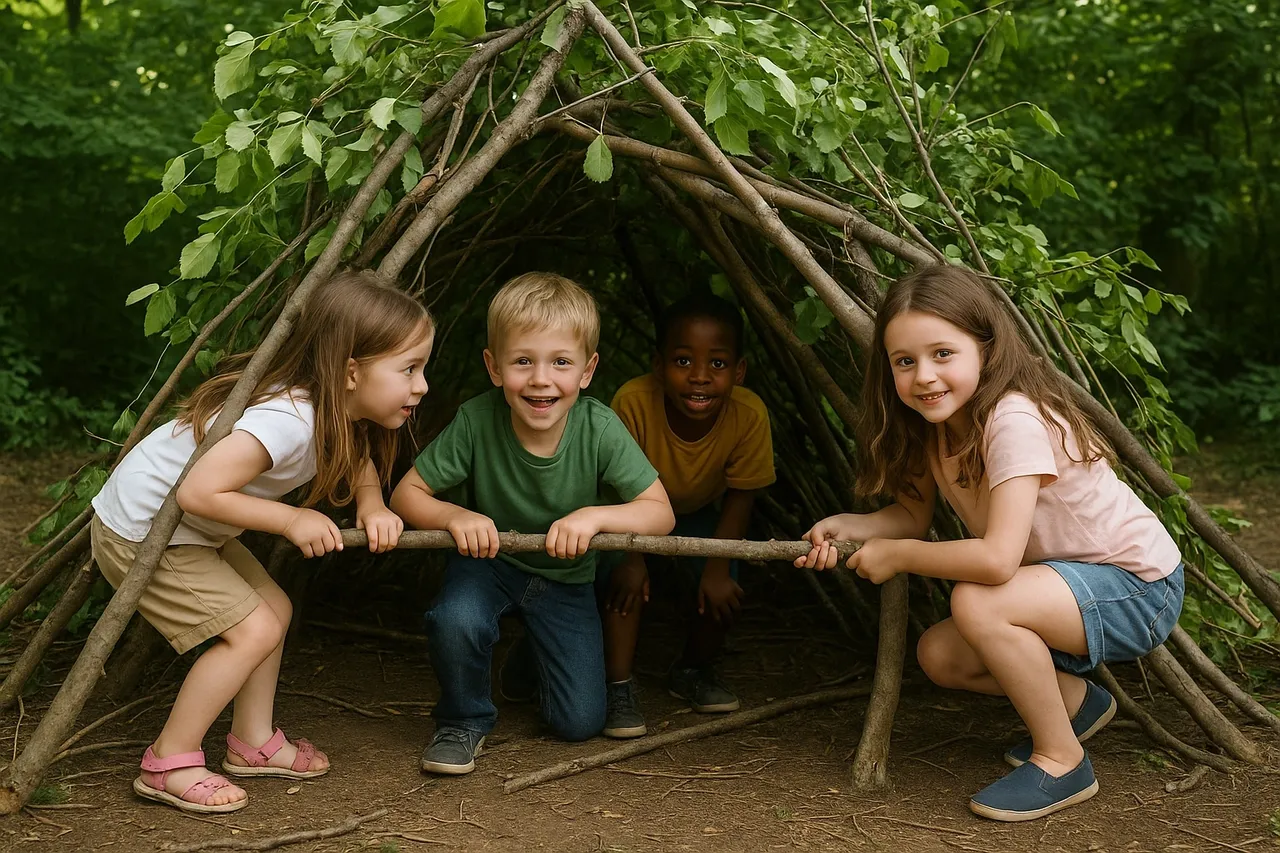
One Forest School session, a small group of children aged five to eight began by building a camp. They used both gross and fine motor skills to lift and move large logs and branches, often working in twos or threes to balance, tie and wedge materials into place. This required communication, negotiation and compromise as they decided how the camp should be built and who would take on which tasks.
As the camp began to come together, the play started to change. The children began assigning themselves roles. “Pretend I’m Boudica,” one of the girls declared. A boy responded, “I will be Caesar of Rome.” The others quickly joined in, each deciding whether they would join Boudica and the Iceni tribe or Rome.
With these roles in place, a shared story began to develop. Ideas were offered, questioned and adapted as the children talked through what might happen next. They eventually decided that a second camp should be built for Rome and that a battle would take place over control of the Iceni camp.
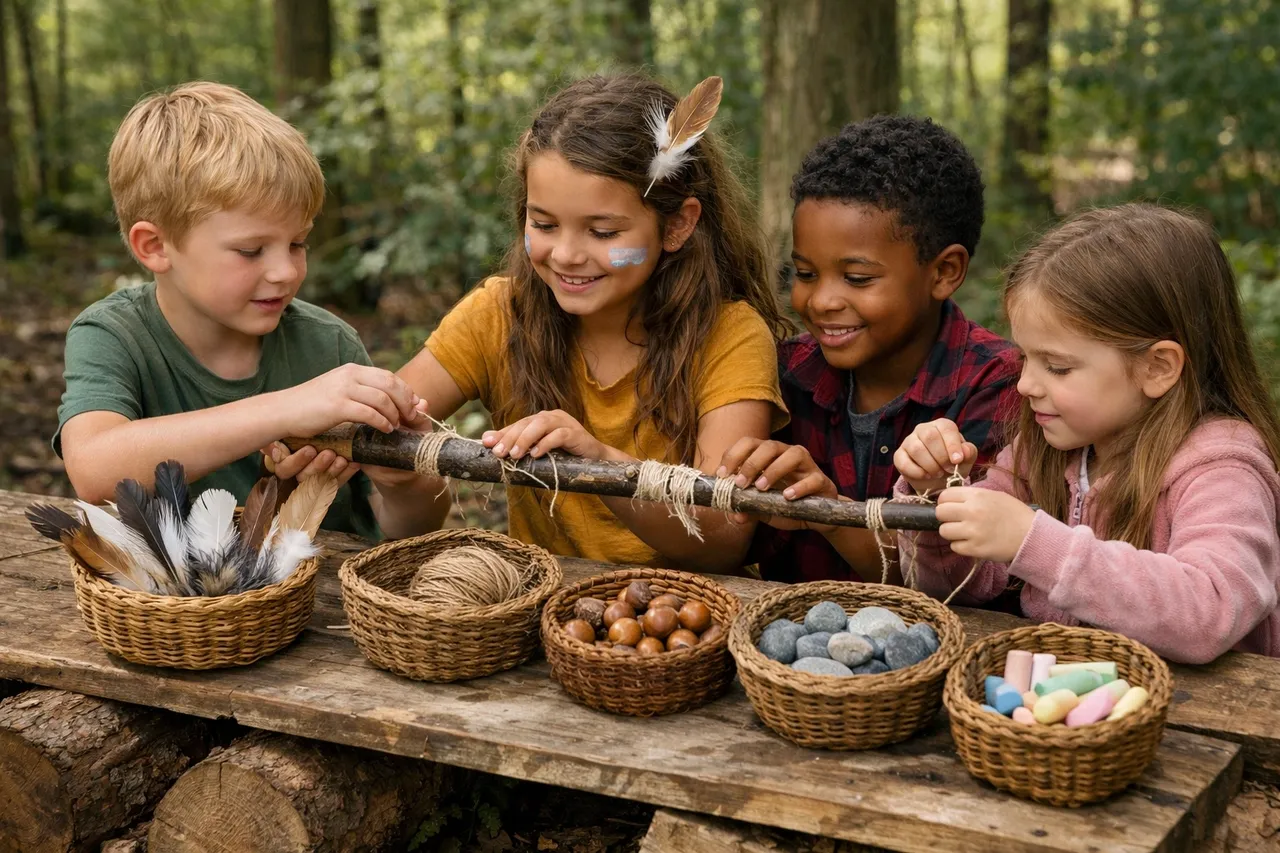
The group then began foraging for materials. Sticks, logs and a large piece of bark were carefully chosen to become swords, shields and bows. As they searched, the children compared size, weight and shape, helped one another carry materials and encouraged each other’s ideas.
They later moved to the crafting area, where they decorated their equipment and adapted their appearance using chalk, twine, leaves and flowers. Throughout this process, they showed creativity, fine motor control, problem solving and sustained shared thinking.
Finally, the children decided that the battle should begin. At this point, I stepped in to encourage them to think about the risks involved and how these could be managed safely. Together, they agreed on a small set of rules and boundaries, including what would happen if those rules were not followed.
The children were able to identify potential risks, negotiate expectations and agree to stop the play if it became unsafe.
In doing so, they had not only planned their play, but had also practised self-regulation, compromise and collective responsibility.
They had thought about how to regulate their own play, assessed risk and agreed to compromise.
Construction, motor development, social negotiation, language and communication, creativity, emotional intelligence, narrative building and problem solving were all evident here. If we were to observe the same learning in the home corner, we would celebrate and encourage it.6
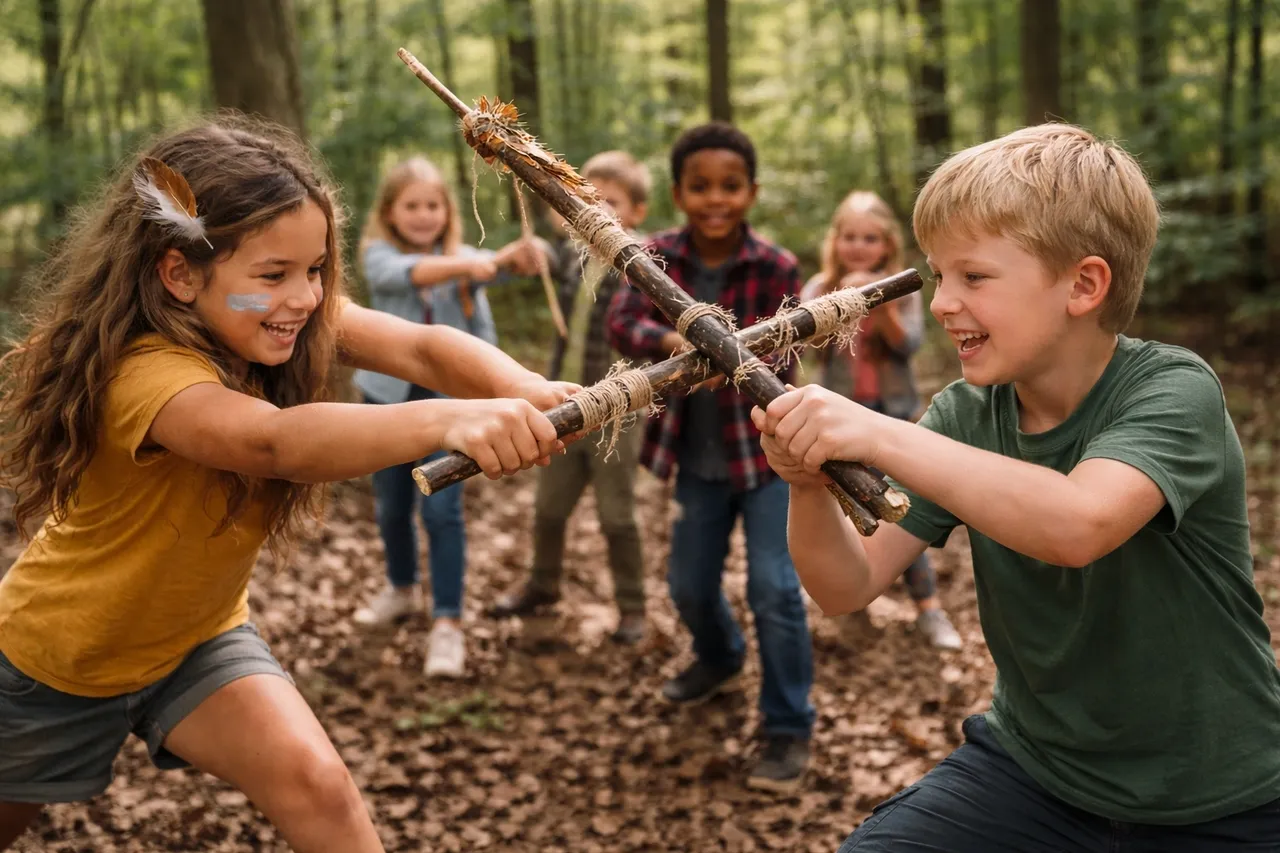
Much of the discomfort around this type of play seems to centre on fears about violence. However, when the research is explored, there is little evidence to suggest that imaginative weapon play leads to violent behaviour.2 In fact, it has been associated with the development of self-regulation and conflict resolution.2
Smith noted that acting aggressive is not the same as being aggressive,7 while Biblow suggested that acting out violence in play may help children become more adept at managing conflict and less prone to real aggression.8
If we consider that children are naturally driven to seek out the experiences they need in order to develop and grow,34 then it is worth asking whether this play is sought out as a way for them to learn how to avoid real conflict. I find this an interesting thought.
Pellegrini suggests that the children most likely to engage in real violence are those who experience rejection within their peer group, a group he referred to as “rejected children”.9
The play examples I have described, in fact both of them, showed children operating within a welcoming and supportive dynamic. Everyone was included, and compromises were made so the play could continue.
In situations like these, it could be argued that children who might otherwise experience rejection are offered opportunities for connection, which may help to reduce the likelihood of real conflict.10
In summary, the level of risk involved in this type of play appears to be relatively small. When weighed against the many benefits observed in practice and discussed in the research, it could be argued that the benefits far outweigh the risks.
Whether children should be allowed to engage in war, gun and superhero play is ultimately a decision for each setting, practitioner and family to make.
However, if we choose to move children away from this play, it may be worth interrogating our own deeply held beliefs and considering whether these beliefs are making us deaf to the needs of the child.
When given the opportunity, children often show themselves to be far more capable of resolving conflict and regulating their emotions than we expect. The more opportunities they have to practise these skills through play, the better they are likely to become.
References
- Donaldson, Margaret C. Children’s Minds. London: Fontana, 1987.
- Holland, Penny. We Don’t Play with Guns Here: War, Weapon and Superhero Play in the Early Years. Maidenhead: Open University Press, 2003.
- White, Jan. Every Child a Mover: A Practical Guide to Providing Young Children with the Physical Opportunities They Need. London: British Association for Early Childhood Education, 2015.
- Dowling, Marion. Young Children’s Personal, Social and Emotional Development. 4th ed. London: SAGE, 2014.
- Cree, Jon, and Marina Robb. The Essential Guide to Forest School and Nature Pedagogy. Abingdon: Routledge, 2021.
- Heikkilä, Mia. “Boys, Weapon Toys, War Play and Meaning-Making: Prohibiting Play in Early Childhood Education Settings?” Early Child Development and Care 192, no. 11 (2022): 1830–1841. https://doi.org/10.1080/03004430.2021.1943377.
- Smith, Sven, Christopher J. Ferguson, and Kevin M. Beaver. “Learning to Blast a Way into Crime, or Just Good Clean Fun? Examining Aggressive Play with Toy Weapons and Its Relation with Crime.” Criminal Behaviour and Mental Health 28, no. 4 (2018): 313–323. https://doi.org/10.1002/cbm.2070.
- Biblow, Emanuel. “Imaginative Play and the Control of Aggressive Behavior.” In The Child’s World of Make Believe: Experimental Studies of Imaginative Play, edited by Jerome L. Singer. New York: Academic Press, 1973.
- Pellegrini, Anthony D. “Elementary-School Children’s Rough-and-Tumble Play and Social Competence.” Developmental Psychology 24, no. 6 (1988): 802–806. https://doi.org/10.1037/0012-1649.24.6.802.
- Hyder, Tina. War, Conflict and Play. Debating Play. Maidenhead: Open University Press, 2005.